
Implants
Dental implants represent the most advanced method of tooth restoration for missing teeth. They mimic the roots of teeth and are made of titanium, an entirely biocompatible material in the human body, which osseointegrates into the jawbone. Fixed prosthetic work is supported on these implants.
The advantages of dental implants include the preservation of adjacent healthy teeth as they do not require reshaping, while also providing the sensation of a natural tooth. Success rates for implants now reach up to 97%.
Dental implants can be used to replace single or multiple missing teeth by placing implant-supported crowns or bridges, respectively. They can also be utilized in implant-supported overdentures, where a small number of strategically placed implants, along with special connectors, maximize retention, preventing mobility during function and speech, thereby enhancing quality of life.

Stage 1: Planning
At Athens Dental Spot, the process of restoring teeth with implants initially involves diagnosis and meticulous preparation of the treatment plan based on the desired final restoration.
Specifically, an aesthetic analysis of the face and smile is performed. Then, the new teeth and smile are digitally designed using specialized software (Digital Smile Design). The visualization of the final result, combined with the radiographic imaging of the implant placement area using cone beam computed tomography (CBCT) of the jaw, allows for the assessment of bone, the selection of the precise position and dimension of the implant for placement.
In more complex cases, the safety and precision of implant placement are ensured with the use of special surgical guides (templates) that are 3D printed, taking into account their desired positions from the final digital design and the CBCT of the patient. Digitally guided implant placement leads to reduced postoperative trauma and faster healing.
Stage 2: Implant placement
The surgical placement of implants follows local anesthesia. In cases where there is insufficient bone for implant placement, either in height or width, various bone regeneration techniques are performed, depending on the amount of missing bone, using bone grafts.
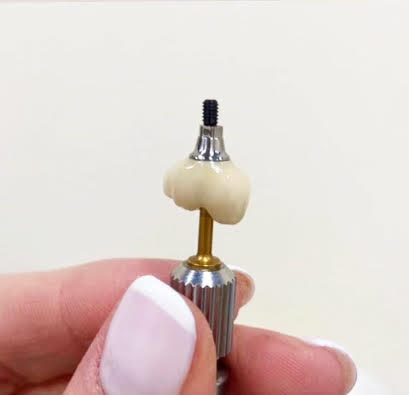
Stage 3: Placement of final prosthetic restoration
After the osseointegration period, that usually takes within 2-4 months, the fabrication of the final implant-supported restorations begins. During this period the patient wears his\her temporary\transitional restorations.

Same Day Teeth
The Same Day Teeth protocol provides the possibility of placing the prosthetic restoration within 48 hours after the surgical procedure. This protocol is suitable under specific conditions, following careful case selection and when initial stability of the implants has been achieved to allow for immediate loading.
The placement and restoration of the implants, when performed by a specialized team of clinicians, is a straightforward and painless process that guarantees a functional, biological, and aesthetic outcome.
FAQ
The placement of dental implants is performed under local anesthesia and in general is a comfortable procedure. After the anesthesia wears off, there may be a mild discomfort that can be managed with regular painkillers in the following days.
Although implants are a routine procedure, they can fail, meaning the implant may not integrate with the bone. Smoking, poor oral hygiene, and infection of the surgical site are some factors that can negatively affect the integration of the implant. The failure rates are particularly low, at 1%-5%. The key to the successful placement of a dental implant is a correct diagnosis and an accurate treatment plan.
Good oral hygiene is particularly important for long-term implant maintenance, just as it is for natural teeth. In our clinic, personalized instructions are given according to the patient and the prosthetic restoration. Equally important as daily oral care are periodic check-ups and professional dental cleaning. This ensures the long-term survival of the implants.
